The toddler years — spanning ages one through three — are defined by an almost relentless drive toward independence. Walking, climbing, running, and talking emerge in rapid succession, and with each new skill comes a child who is more capable, more curious, and more determined to do things on their own terms. The toddler years represent one of the most energetic and emotionally complex stages in all of human development.
Overview of the Toddler Stage – Ages 1-3 Years Old
During this period, toddlers experience an explosion of vocabulary — moving from a handful of words to hundreds — while simultaneously navigating the push and pull between fierce autonomy and a deep need for the secure attachment of their caregivers. They test limits not out of defiance, but because testing limits is how they learn where the boundaries of their world lie. It is exhausting, exhilarating, and completely normal.
Understanding the key milestones of the toddler stage helps caregivers and parents support healthy development, recognize potential concerns early, and fully appreciate the extraordinary person taking shape before their eyes.
Key Milestones
🔹 Walking & Running
The shift from crawling to walking is one of the most celebrated milestones in early childhood — and for good reason. Most toddlers take their first independent steps between 12 and 15 months, though the range of normal extends well into 18 months. Once upright, the pace of motor development accelerates quickly: walking becomes steadier, then faster, and by around 18–24 months most toddlers are running, albeit with the characteristic top-heavy wobble that makes this stage so endearing.
🔹 200–1,000 Word Vocabulary
Language development in the toddler years is nothing short of astonishing. At 12 months, most children have just a handful of words. By 24 months, the average toddler has a vocabulary of 200–300 words and is beginning to string two words together — “more milk,” “daddy go,” “big dog.” By age three, many children are speaking in full sentences and can hold simple conversations, with vocabularies that may exceed 1,000 words.
🔹 Parallel Play
Toddlers are social beings, but their social development follows a predictable and sometimes puzzling path. Rather than playing cooperatively with other children, toddlers typically engage in what developmental psychologists call parallel play — playing alongside, rather than with, another child. Two toddlers might sit next to each other, each absorbed in their own activity, occasionally watching the other but rarely truly interacting. This is not antisocial behavior; it is developmentally appropriate.
🔹 Toilet Training
Toilet training is one of the most culturally varied and emotionally charged milestones of the toddler years. Globally, the timing and approach to toilet training varies enormously — some cultures begin as early as infancy using elimination communication, while in the United States the average age of completion has shifted to around 36 months or later. Most toddlers show readiness signs — staying dry for longer periods, awareness of the need to go, interest in the bathroom — somewhere between 18 and 30 months.
🔹 The “NO” Stage
Around 18 months to 2 years, most toddlers discover the power of the word “no” — and they use it with remarkable frequency and conviction. The “no” stage can be simultaneously maddening and, if you let it, genuinely hilarious. A toddler who shouts “NO!” at a request to put on shoes, or insists “no nap” while visibly fighting to keep their eyes open, is not being manipulative. They are exercising one of the first tools of self-determination they have ever had.
For the Yogi with a Toddler
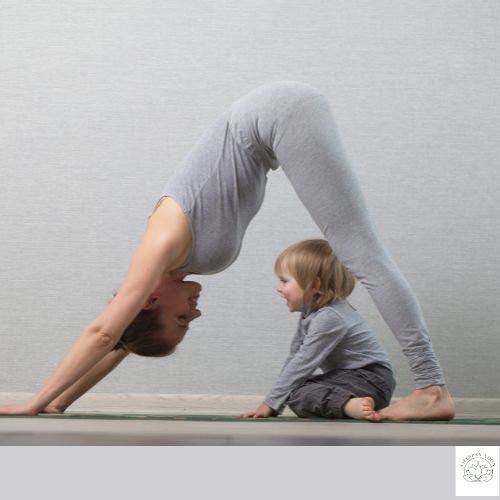
You and your toddler can begin to do a little yoga together — and by age three, they may be ready for a Preschool Yoga Class. Movement, breathwork, and mindfulness remain powerful tools for caregivers navigating the toddler years. Here are some resources to support both your practice and theirs:
- Living the 8 Limbs of Yoga with Baby by Beth Daugherty — A guide to weaving the eight limbs of yoga into life with a new baby, connecting ancient practice with the everyday reality of new parenthood. Available in paperback on Amazon and at lifespanyoga.com.
- Blog: Living the 8 Limbs of Yoga with Toddlers by Beth — This post draws on Beth’s experiences teaching Mommy and Me Yoga, Family Yoga, and Kids Yoga, and explores how the 8 limbs of yoga can be brought meaningfully into these classes. lifespanyoga.com/living-the-8-limbs-of-yoga-with-baby/
- Yoga with Adriene (YouTube) — Free, accessible yoga at home, including shorter flows that can be done during nap time or after bedtime.
- Baby & Me / Toddler Yoga classes — Many studios and community centers offer parent-toddler yoga sessions, which double as social time for caregivers and joyful movement for little ones. By age 3, look for dedicated Preschool Yoga classes.
- Cosmic Kids Yoga (YouTube) — A wildly popular free resource featuring yoga stories and mindfulness content designed specifically for young children. A wonderful way to introduce your toddler to movement and breath.
🧘 Tip: Even 10 minutes of shared movement with your toddler counts — for both of you. Toddlers love to imitate, and watching a caregiver move mindfully is its own kind of lesson.
A Note on Milestones
Developmental milestones are guidelines, not rigid deadlines. Every toddler develops at their own pace, and a range of timelines falls within healthy norms. It is worth noting that the term “toddler” is sometimes applied to ages 1–2 and sometimes 1–3 — both uses are common. If you have concerns about your child’s development, the best resource is your pediatrician or a developmental specialist who can assess your individual child in context.